You just raised, every euro counts

You got your first round. Your runway is 12-18 months. You need to ship fast, hire smart, and most importantly stop burning cash on roles AI can cover. This week massively accelerated what's possible with a lean team.
1. You no longer need a 15-person team
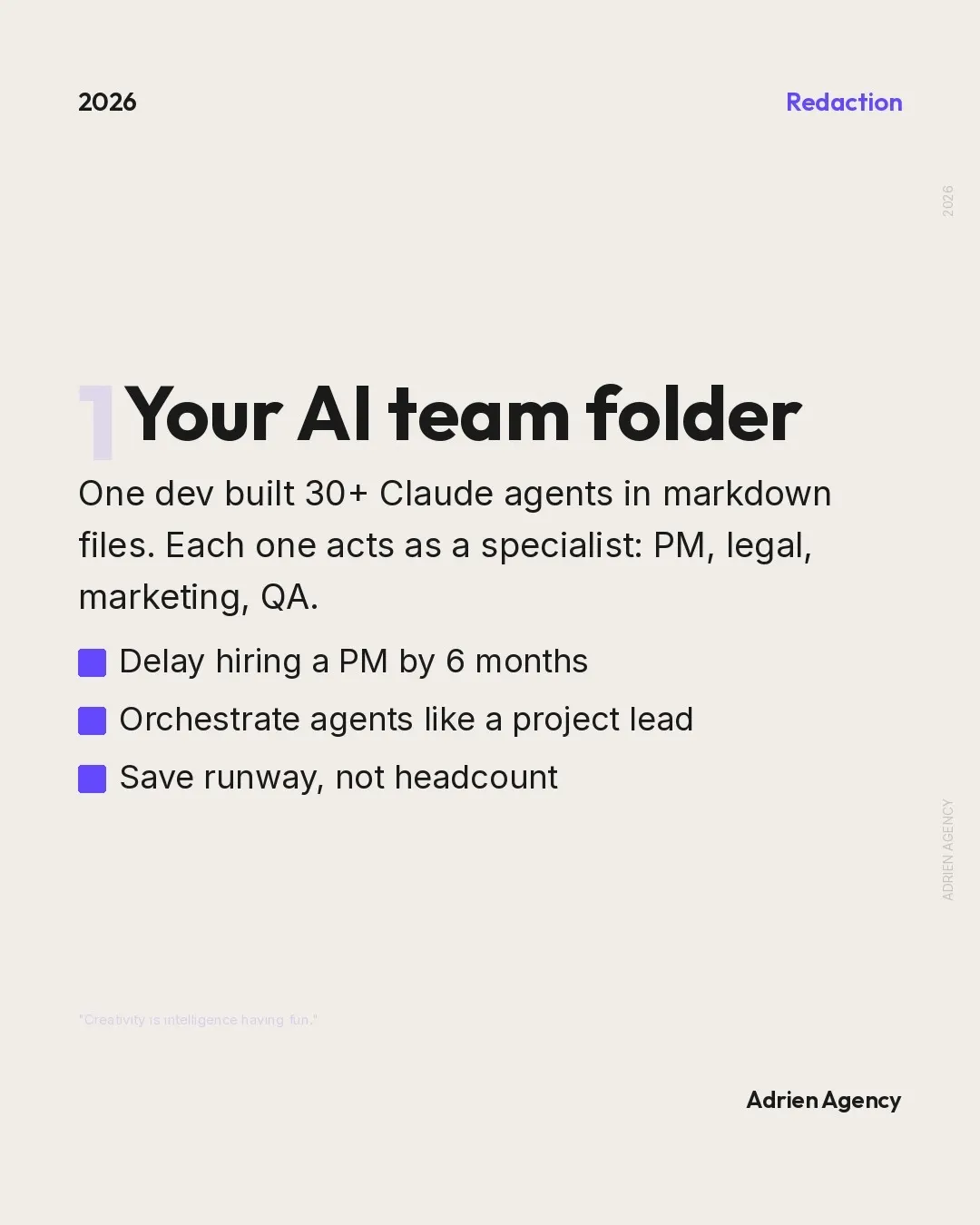
Claude Code + markdown agents = a simulated team of 30+ roles
A developer showcased a .claude/agents/ folder with 30+ specialized agents: one markdown file per role (engineering, product, marketing, design, legal, finance, testing). Each agent has a precise scope and defined behavior.
What this changes for you: After a seed round, you're torn between hiring a PM, a marketer, or a second dev. With this architecture, a technical founder can orchestrate Claude Code like a project manager dispatching to virtual "specialists." You're not replacing humans long-term, but you're pushing back the moment you need to hire these roles by 6 months. And 6 months of runway in early stage is massive.
See the original post | @Suryanshti777
2. Your marketing budget just shrunk
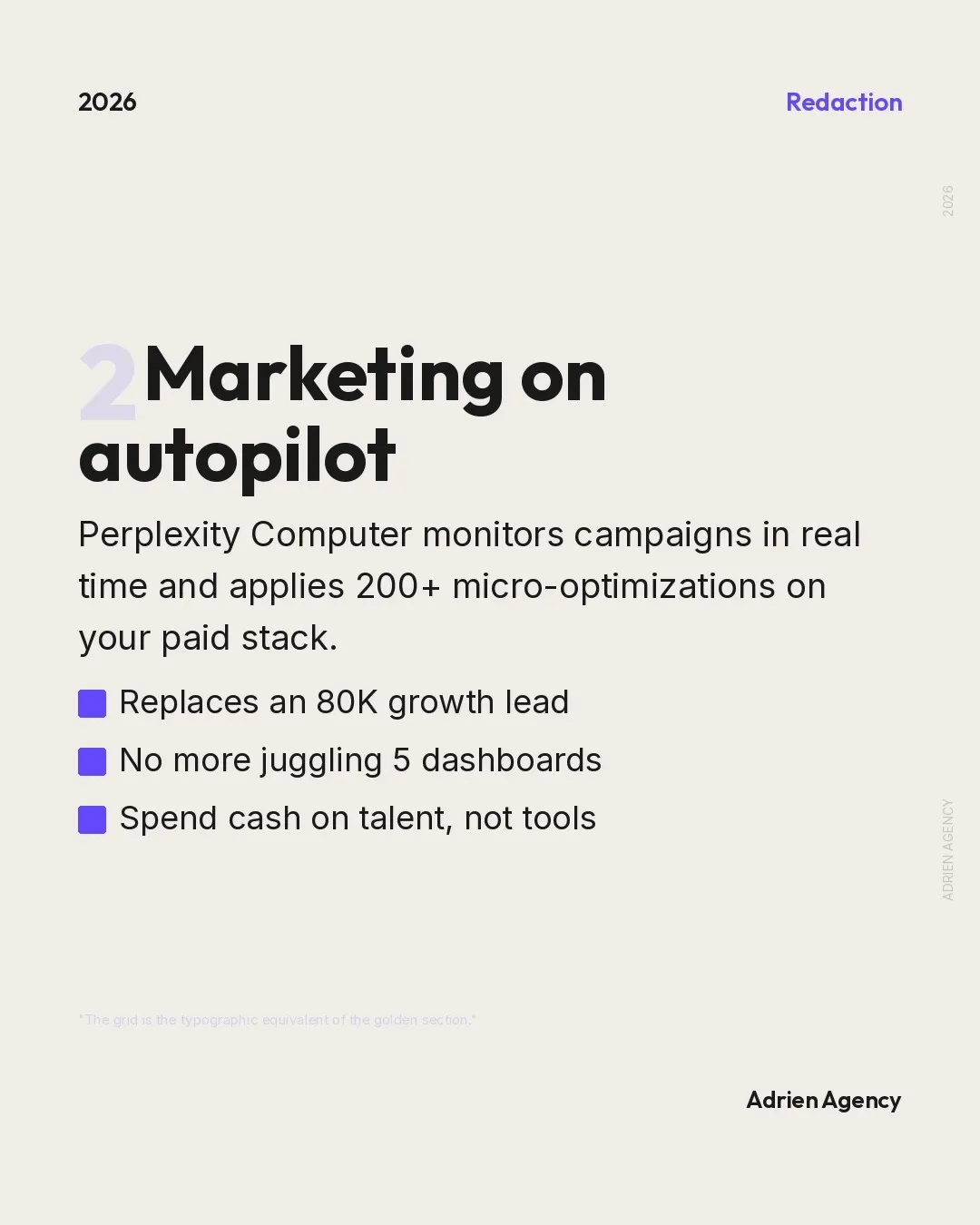
Perplexity Computer replaces $225,000/year in marketing tools
An AI agent that scans campaigns in real-time, manages budgets, detects ad fatigue, and makes 224 automatic micro-optimizations across your ad stack.
What this changes for you: After your raise, the board expects traction. But you don't have the budget for a Growth Lead at $93,000 + Mixpanel + HubSpot + an attribution tool. Perplexity Computer can run your acquisition engine at a fraction of the cost. A non-technical founder can manage campaigns in natural language instead of juggling 5 dashboards.
See the original post | @AskPerplexity
3. Your due diligence and market research are now free
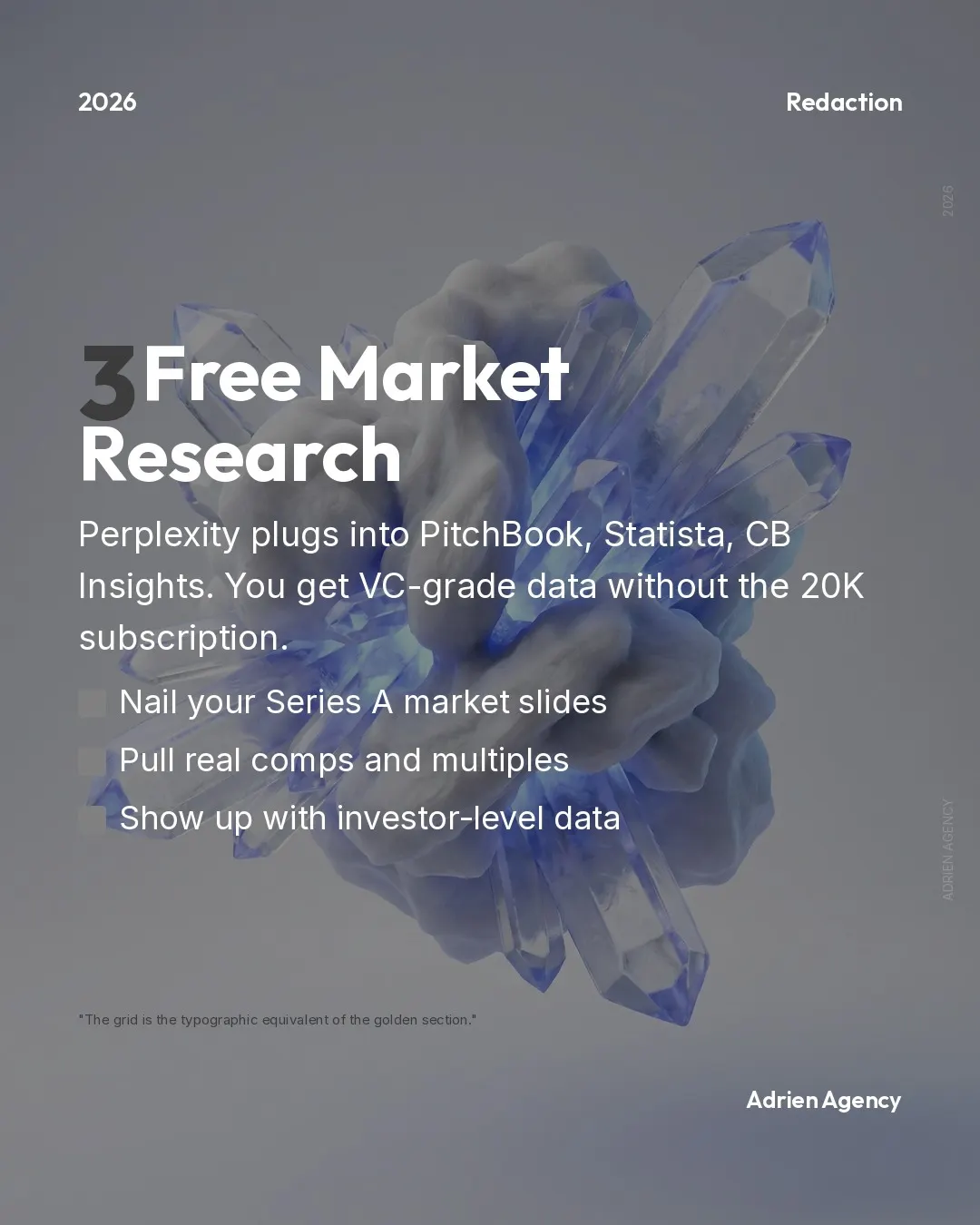
Perplexity Computer connects to Pitchbook, Statista, CB Insights
Access the same data as VC/PE funds, directly from the Perplexity interface.
What this changes for you: When preparing your next round (Series A), you need to prove you know your market better than the investor across the table. Before, Pitchbook access cost over $20,000 per year. Now you can extract market size data, comparables, competitor fundraising, and build your deck with solid numbers, without paying a cent in data subscriptions.
See the original post | @AravSrinivas
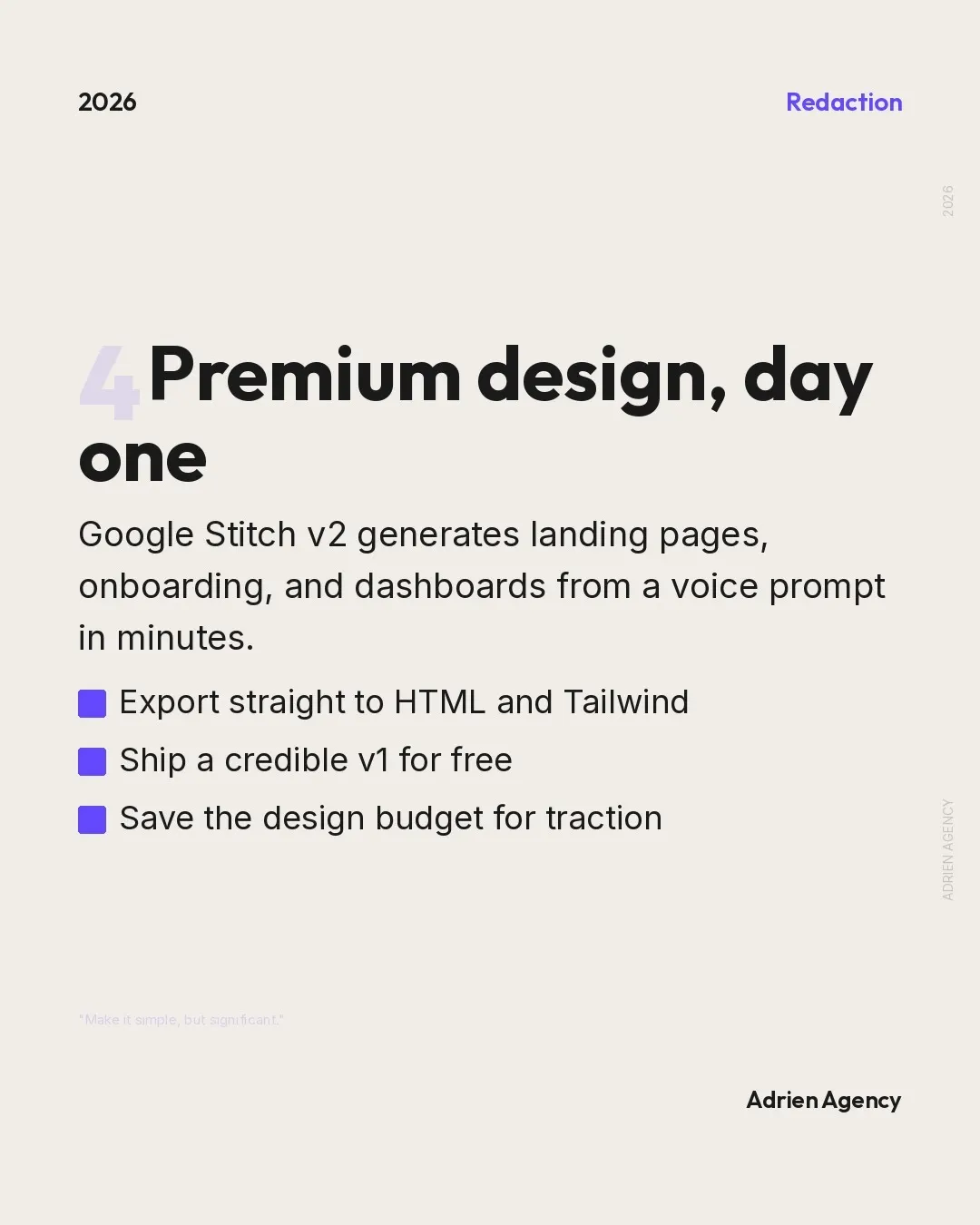
4. Your product can have premium design from day 1
Google Stitch v2: "Vibe Design", infinite AI canvas, 5 screens in one prompt
Google updated Stitch with an infinite AI-native canvas, real-time voice prompts, simultaneous generation of 5 screens, and direct HTML/CSS/Tailwind export. You describe what you want, Stitch generates the UI, you click "Play" to simulate the user journey.
What this changes for you: You no longer have to choose between "a product that works but looks ugly" and "spending $17,000 on design." A founder can prototype a landing page, onboarding, and dashboard in one afternoon, with a clean enough output for your first 1,000 users. Figma's stock dropped at the announcement. That's a strong signal.
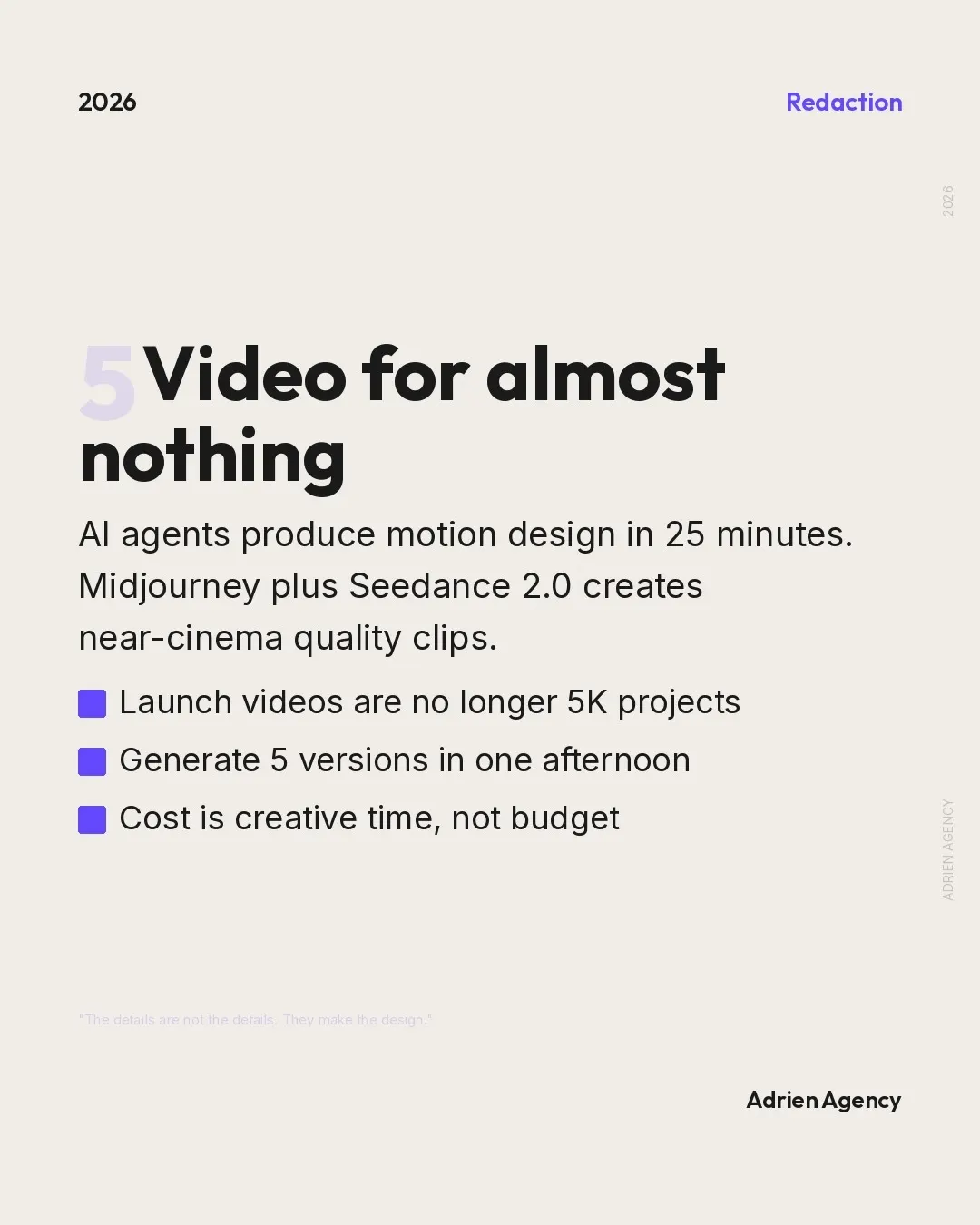
5. Your motion design and product videos cost nothing anymore
An AI agent produces a motion design video in 25 min, 2 revisions
Meanwhile, the Midjourney + Seedance 2.0 workflow enables creating cinematic-quality AI short films by combining image-to-video with up to 12 reference files.
What this changes for you: Your Product Hunt video, your investor demo, your landing page hero video: all of that used to cost $3,500 to $12,000 in freelance motion design. Now you can iterate in 25 minutes. Launch 5 versions, A/B test, and keep the one that converts. Premium content production cost went from "budget item" to "coffee break."
AI motion post | @chddaniel
AI short film | @lexx_aura
6. If your product involves 3D or gaming, now is the time
Tripo P1.0: production-ready 3D assets in 2 seconds
Tripo Smart Mesh: clean 3D mesh in 13 seconds instead of 3 days
Native 3D diffusion architecture generating assets directly usable in game engines. Presented at GDC 2026.
What this changes for you: If your startup has a 3D component (e-commerce with product visualization, edtech, gaming, AR/VR), you just divided asset creation time and cost by 100. A senior 3D artist costs $69,000 to $93,000 per year. With Tripo, a founder can generate initial assets for a 3D MVP in a few hours.
See the original post | Tripo AI (@traborobo)
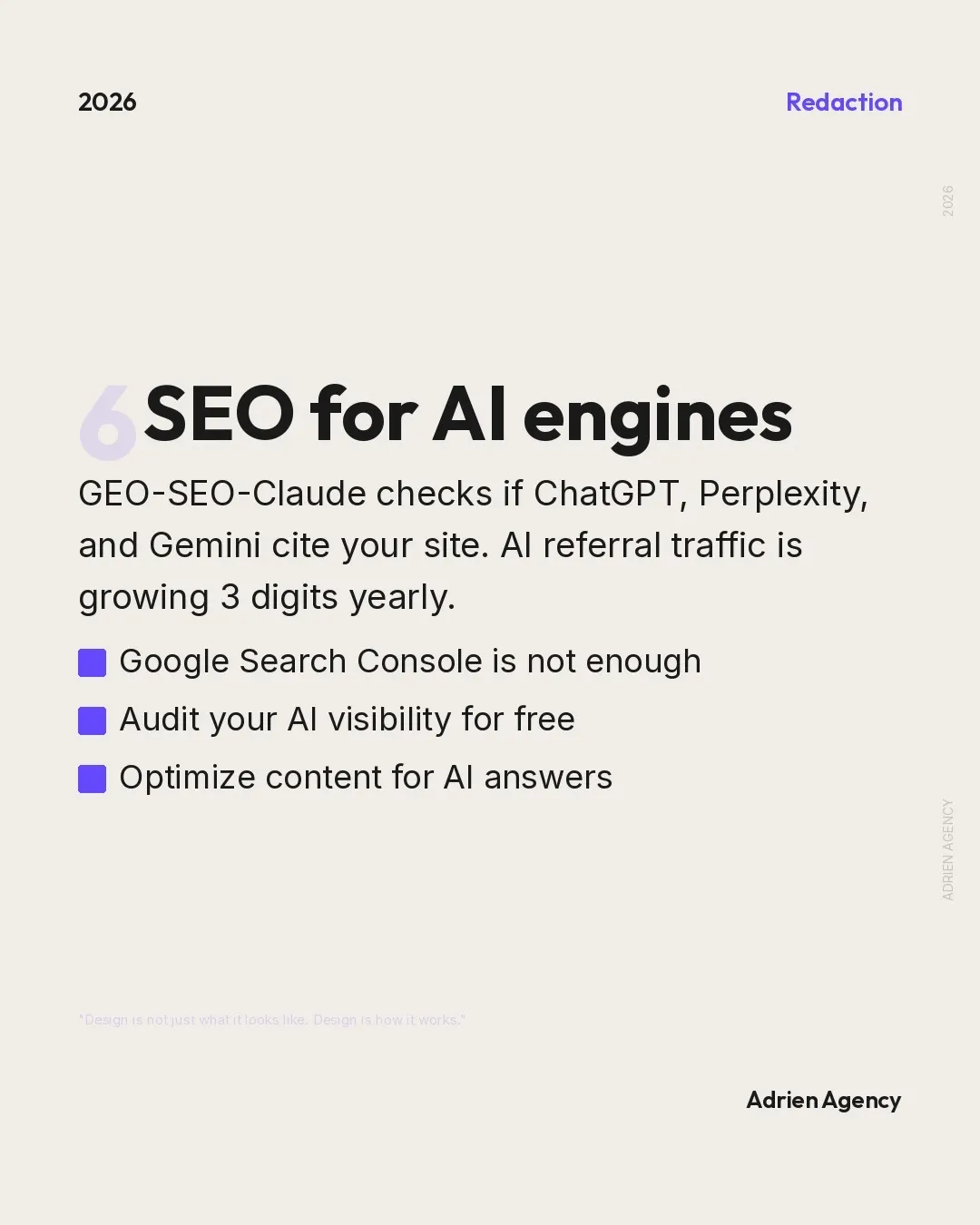
7. Your SEO must now target AI, not just Google
GEO-SEO-Claude: visibility audit on ChatGPT, Perplexity, Gemini
An open source tool that evaluates whether your site is cited by AI search engines, not just indexed by Google.
What this changes for you: If your acquisition strategy relies on inbound/SEO, know that AI-referred traffic is growing at +627% per year. If your site is invisible to ChatGPT and Perplexity, you're already losing potential users. The tool is free, open source, and gives you an actionable score. Integrate it into your stack right now.
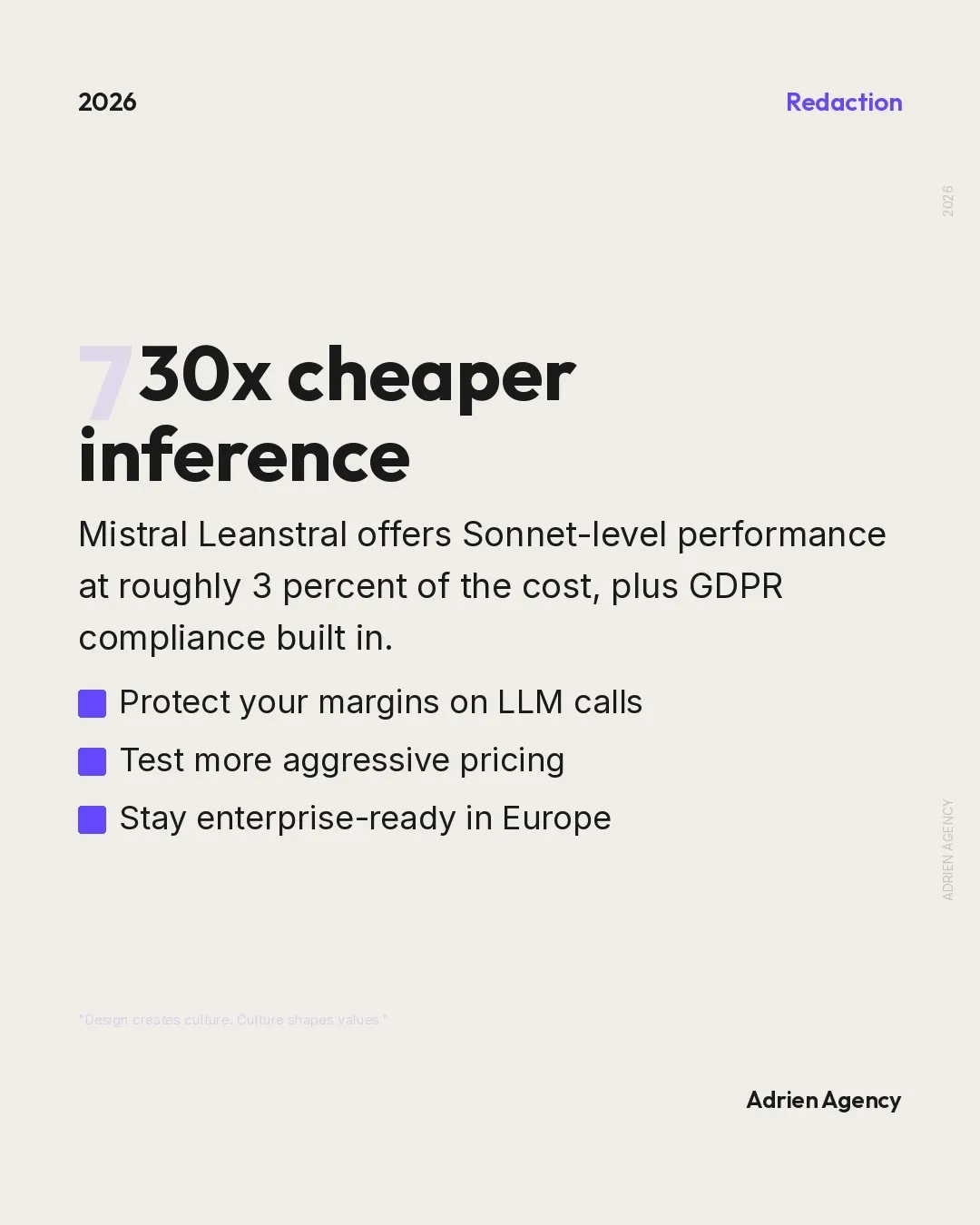
8. Mistral Leanstral: the European alternative at 30x lower cost
Claude Sonnet-level performance for $18 instead of $549
What this changes for you: If your product uses LLMs in the backend (and it should), your API bill can explode with growth. Leanstral gives you a European, open source, GDPR-compliant option at 3% of Sonnet's cost. For a post-seed startup scaling API usage, that's the difference between a sustainable burn rate and a bridge round call.
See the original post | Mistral AI (@MistralAI)
9. Train your team on AI for free
Anthropic Academy: 13+ free courses with certificates
Claude 101, Claude Code in Action, Building with Claude API.
What this changes for you: Your first hires might not be AI-native. Instead of paying for training or wasting time on onboarding, send them to Anthropic Academy. In one week, your team knows how to use Claude as a daily tool. That's immediate ROI on team productivity.
See the original post | Anthropic (@AnthropicAI)
10. AI hardware is coming: prepare your infra
NVIDIA GTC 2026: Vera Rubin, DLSS 5, Groq 3, NemoClaw
Vera Rubin (next-gen GPU), Groq 3 LPU (35x more efficient in inference), NemoClaw (secure enterprise fine-tuning), DLSS 5 (neural rendering).
What this changes for you: If you're building an AI-heavy product, inference costs will drop drastically by late 2026. This means: don't over-invest in infra now. GPU/inference prices will drop. Focus your budget on product and acquisition, not compute. And if you're using local models (edge AI), the Neotron 3 Super opens the door to on-device deployment without cloud.
The takeaway in one sentence
A post-seed startup in March 2026 can operate with 3 to 4 people at the level of what required 15 people 18 months ago, as long as these tools are integrated into every layer of the business (product, design, marketing, data, content, 3D).